
Red-tailed Hawks
live Hosted by Cornell LabDon't miss a thing!
Keep up-to-date on all the nesting news.

Video Highlights
-
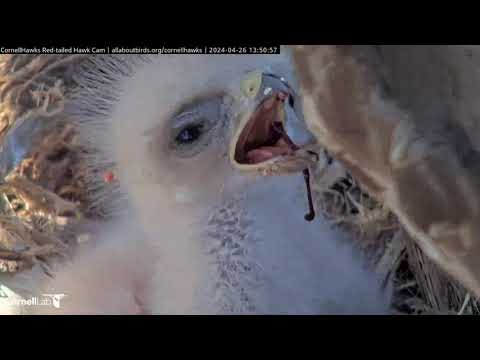
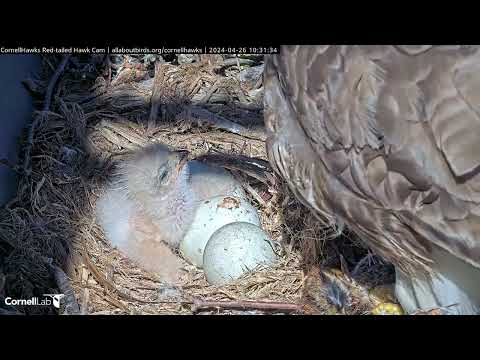
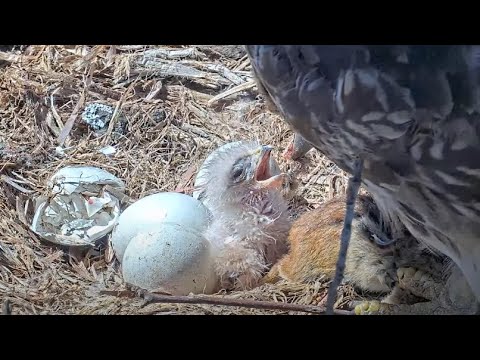
One-day-old Hawk Nestling N1 Enjoys an Afternoon Meal at the #Cornellhawks Nest | April 26, 2024
-
Red-tailed Hawk Nestling "N1" Eating A Hearty Meal [Cam 2 Perspective] | April 26, 2024
-
Hungry Hawk Nestling Works Through A Second Meal at the #cornellhawks | April 26, 2024
-
Hatchling Hawk's First Meal! Big Red Feeds Chipmunk To Chick At Cornell Hawks Nest – April 25, 2024


News
-
April 10, 2024 Most Watched Nest Cam Highlights From Bird Cams!
-
April 1, 2024 Big Red Begins 2024 Breeding Season With Toe Injury
-
March 19, 2024 Red-tailed Hawk Cam Timeline
About the Site
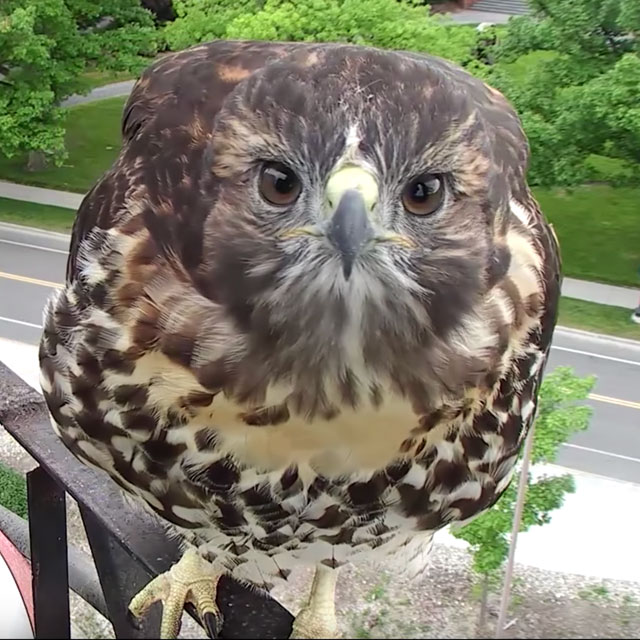
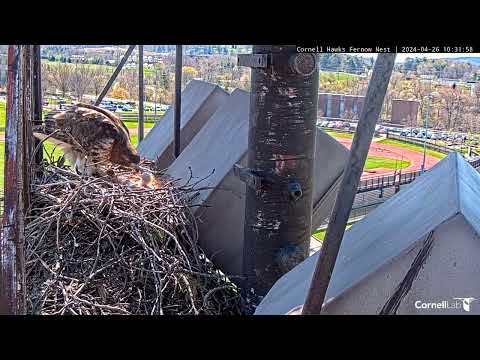
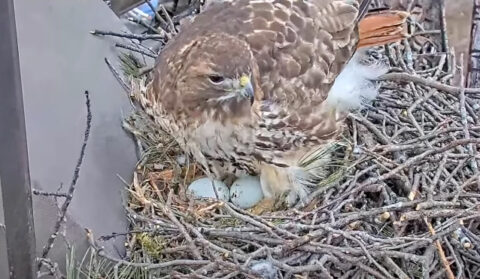
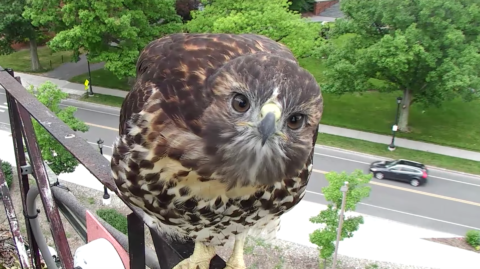
A Red-tailed Hawk pair has been nesting above Cornell University’s athletic fields since 2012
They make use of two different light towers for their nest sites. In 2012, 2015, and 2018–2021 they used a tower near Fernow Hall, and in 2013, 2014, and 2016, they used the tower nearest Weill Hall. We installed cameras at both of these sites to get a better look at the intimate behavior of these well-known birds as they raise their young amid the bustle of a busy campus.
Who’s Who
-
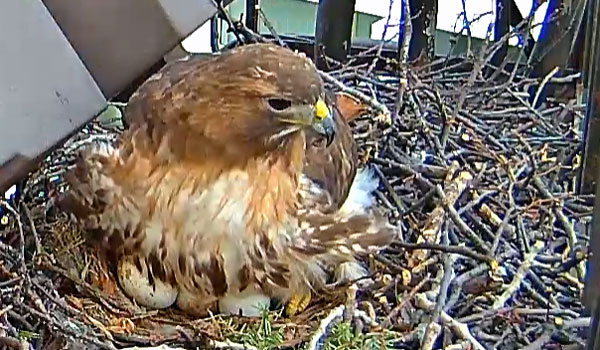
The female, nicknamed “Big Red” in honor of her alma mater
She is slightly larger, with a darker head, nape and throat, and is banded on her right leg. From banding records we know she was banded in nearby Brooktondale, New York, during her first autumn in 2003.
-
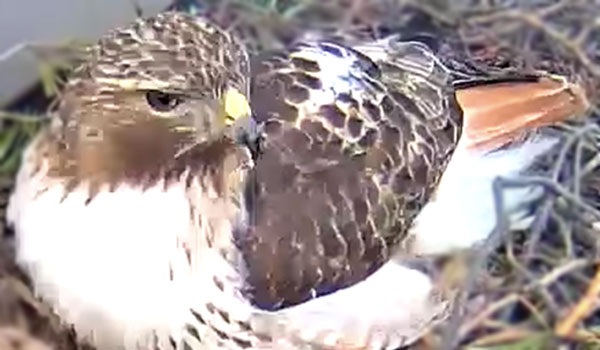
The male, Arthur, was named in honor of the founder of the Cornell Lab, Arthur A. Allen.
He was first spotted on Cornell University campus as a fledgling in 2016. He is unbanded and has a paler chest, head, and nape than Big Red. The pair first spent time together in April 2017, after Big Red’s previous mate, Ezra, had died. The hawks completed their first breeding season together in 2018.
-
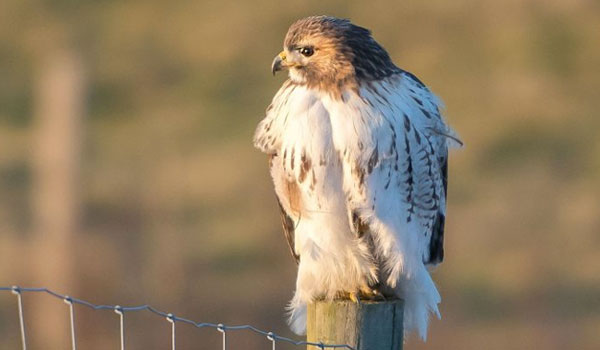
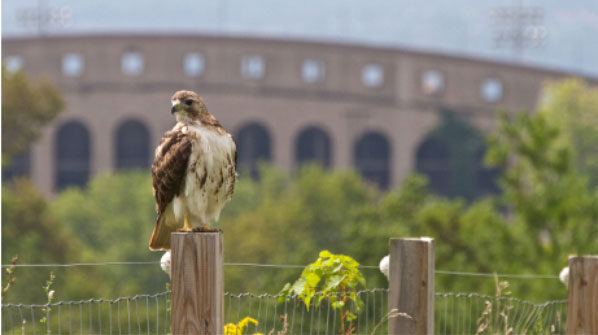
Big Red’s former mate, named Ezra after the co-founder of Cornell University
He died in March 2017 (read about his legacy). He and Big Red had raised successful broods every year from 2012–2016. He was a bit smaller and had golden-tawny feathers on his face and head. He also had a paler neck than the female. He was first banded in 2006 as an adult bird on Judd Falls Road near the Cornell campus.
About Cams
The Cornell Lab Bird Cams connects viewers worldwide to the diverse and intimate world of birds. We work to make watching an active experience, sparking awareness and inspiration that can lead to conservation, education, and engagement with birds.
Our viewers tell us that watching the cams is a life changing experience: an unprecedented learning experience that they liken to virtual field trips or field biology in their living room. We’re excited to continue sharing and learning with the community as we watch the world of birds together.
Photo credits: Ezra (About the Site) by Christine Bogdanowicz

Bird Cams is a free resource
providing a virtual window into the natural world
of birds and funded by donors like you
Pileated Woodpecker by Lin McGrew / Macaulay Library